

For many homeowners, the idea of downsizing can be both exciting and daunting. Downsizing your home...
Why It's Important to Cool Down After a Workout (And How)
Do you usually finish exercising and head straight for the shower or out the door without taking time to cool down? If so, it may be time to rethink that habit. As we age, our bodies benefit from a more gradual transition from activity to rest. A proper cool-down allows your heart rate and breathing to return to normal at a steady pace while helping your muscles and joints recover from exercise. Taking an extra five to ten minutes to cool down can reduce stiffness, improve flexibility, and leave you feeling better later in the day.
Why is Cooling Down After Exercise Important?
Gradually Return Heart and Breathing to Normal
During exercise, the heart pumps faster to deliver oxygen-rich blood to working muscles. At the same time, repeated contractions of the leg and other skeletal muscles help return blood to the heart through the veins. When you stop exercising without a cool-down, the pumping action decreases abruptly. This results in blood temporarily collecting in the legs, reducing the amount returning to the heart. This may cause a brief drop in blood pressure and reduce blood flow to the brain, leading to dizziness or lightheadedness. This effect can be even more pronounced in older adults because aging blood vessels become less elastic, making it more difficult for the body to quickly restore normal blood pressure after exercise. A gradual cool-down keeps the muscles active while allowing heart rate and circulation to return to normal more smoothly.
Reduce Immediate Post-Exercise Stiffness
After exercise, muscles can feel tight and stiff, especially as we age, since aging muscles and connective tissues naturally become less flexible, and joints may be affected by arthritis or other age-related changes. Spending five to ten minutes cooling down by walking at an easy pace and performing easy stretches while your muscles are still warm helps maintain circulation, preserve flexibility, and make the transition from exercise to everyday activities more comfortable. Although this will not completely eliminate muscle soreness the next day, it can reduce feelings of immediate stiffness and support a smoother recovery.
Promote Relaxation
Exercise activates the sympathetic nervous system, which is responsible for the "fight-or-flight" response. During physical activity, this system releases adrenaline into the bloodstream, thereby increasing heart rate, breathing, and blood pressure to meet the body's demands.
A cool-down allows the parasympathetic nervous system (sometimes referred to as the "rest-and-digest" system) to gradually take over. Heart rate slows, breathing becomes deeper and more relaxed, and stress hormone levels begin to decline. This transition helps the body move from a state of exertion to one of recovery.
Naturally Transition to Hydration and Recovery
A cool-down provides a more moderate transition between exercising and the rest of your day. Instead of rushing to your next activity, use these few minutes to begin a gentle recovery process.
A cool-down is an ideal time to begin rehydrating. While drinking fluids during exercise helps avoid dehydration, continuing to drink afterward replaces fluids lost through sweat and supports recovery. Because the sense of thirst often decreases with age, adults over 50 should make a conscious effort to rehydrate after exercise, even if they don't feel especially thirsty.
A 5–10 Minute Cool-Down Routine
For most healthy adults over fifty, an effective cool-down is simple and light, taking only 5–10 minutes. The goal is not to get another workout—it is to help your cardiovascular system return to its resting state, maintain flexibility, and begin the recovery process.
1. Slow Down Your Pace (3–5 minutes)
Don’t abruptly stop exercising. Instead, gradually reduce the intensity. For example,
- Walk at an easy pace after brisk walking or jogging.
- Pedal slowly with little resistance after cycling.
- Swim easy laps or walk in the pool after swimming.
- Take an easy-paced treadmill walk after strength training.
You’ll know that your heart rate and breathing have returned to normal when you're comfortable enough to carry on a conversation.
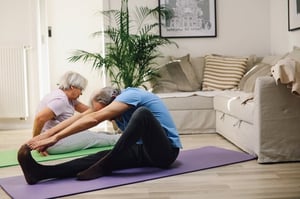
2. Gentle Stretching (3–5 minutes)
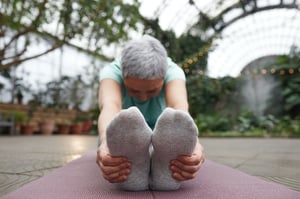 Stretching before a workout is common, but many fitness enthusiasts neglect it after exercise. Cool-down stretching is particularly effective because muscles are warmed up. Regular post-exercise stretching can help maintain flexibility, preserve joint mobility, and make everyday movements more comfortable as you age.
The following list suggests muscles to stretch. Hold each stretch for 15 to 30 seconds, stretch only to the point of mild tension—not pain—and avoid bouncing. Slow, steady stretches are safer and more effective than forcing a muscle beyond its comfortable range.
- Calves - Push against a wall with one leg behind you.
- Hamstrings - Place one heel on a low step or bench and lean forward slightly.
- Quadriceps - Hold onto a chair or wall while gently pulling one heel toward your buttocks.
- Hip Flexors - Step into a short lunge while keeping your torso upright.
- Glutes - Sit on a bench and gently cross one ankle over the opposite knee.
- Chest - Clasp your hands behind you or place your forearm against a wall and gently rotate away.
- Shoulders - Bring one arm across your chest and gently pull it closer.
3. Controlled Breathing (1–2 minutes)
A helpful but often overlooked cool-down step is controlled breathing. This encourages the body to transition from the sympathetic ("fight-or-flight") response toward the parasympathetic ("rest-and-digest") state.
Try this pattern:
- Inhale through your nose for 4 seconds
- Exhale slowly through your mouth for 6 seconds
- Repeat for 5–10 breaths.
4. Assess your Recovery
As you cool down, take stock of how you’re feeling. Ask yourself:
- Is my breathing back to normal?
- Has my heart rate slowed?
- Do any joints hurt?
- Am I dizzy or unusually fatigued?
- Do any muscles feel unusually tight?
Call 911 immediately if you experience chest pain, severe shortness of breath, fainting, or symptoms of a heart attack or stroke during or after exercise. These symptoms are never a normal part of a workout and require immediate medical attention.
During all four steps, keep rehydrating to replace fluids lost through sweat. If you’ve just finished a lengthy or intense workout or it’s an extra-warm day, consider drinking electrolyte-replacement products along with water.
It's natural to feel fatigued and ready to be done with your exercise routine at the end. However, a cool-down should be a healthy last step of every workout. Spending just five to ten minutes gradually slowing your pace, stretching, breathing deeply, and rehydrating helps your body recover more comfortably and prepares you for your next workout. For adults over 50, this simple habit can reduce dizziness and stiffness, maintain flexibility, and support safe, consistent exercise for years to come.
Your fitness and recovery needs may change as your routine changes. A Money Market Account helps your savings earn while keeping funds accessible for wellness expenses or other priorities that come up.